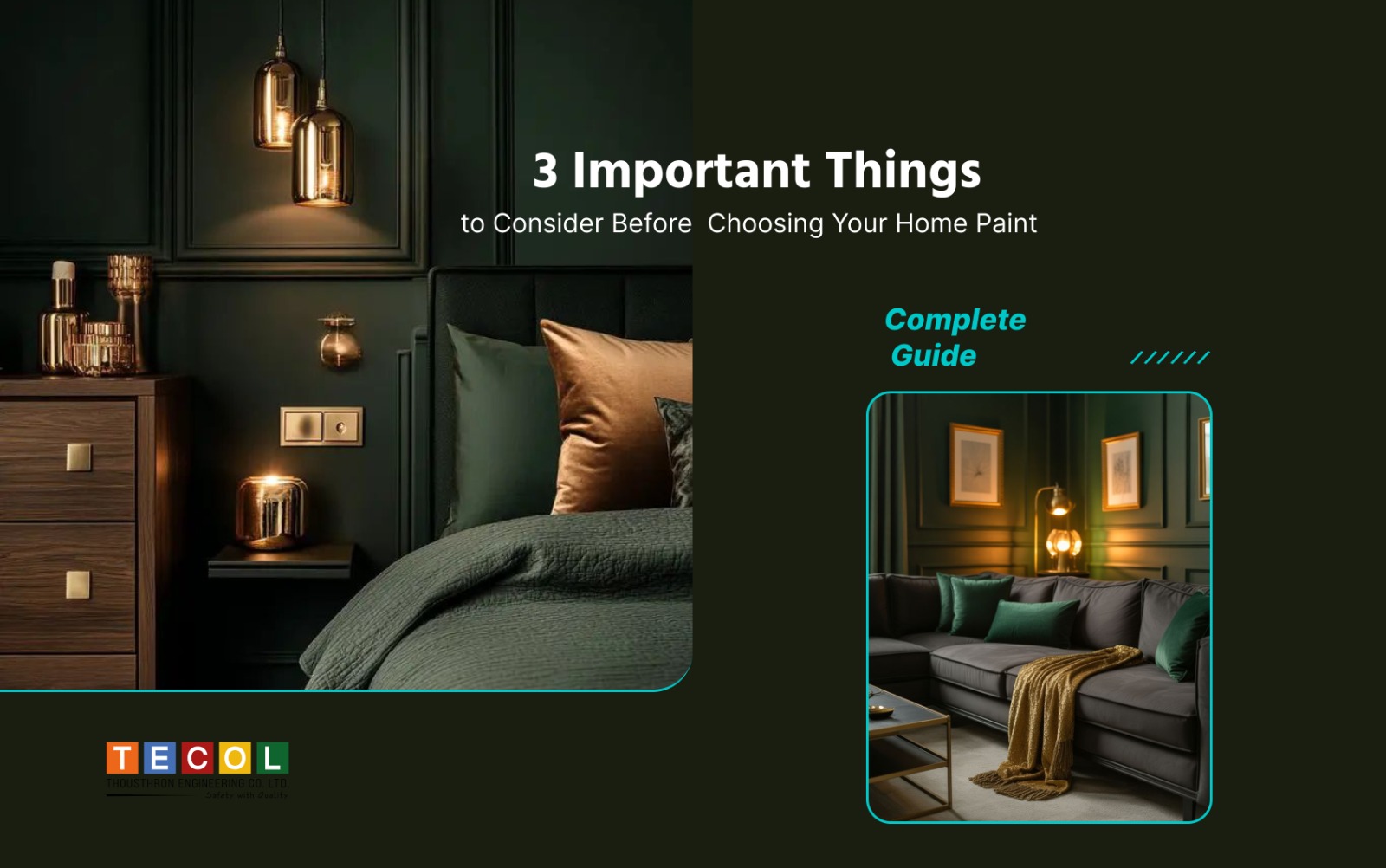
Introduction: Choosing paint for your home may seem like a simple task, but in reality, it requires careful planning, awareness, and understanding. The right paint color can transform your home—making it brighter, more spacious, more stylish, and more comfortable. On the other hand, the wrong color choice can make even a well-designed room feel dull or mismatched. To make your home painting project successful, you must consider multiple factors such as lighting, room function, paint quality, color psychology, and long-term maintenance.
Below are the Three most important things you should always keep in mind before choosing paint, along with TECOL’s professional smart tips to help guide you toward the perfect decision.
1. Understand Room Lighting and Space Before Choosing Colors

Choosing the perfect paint color starts with understanding how lighting and room size influence the final appearance of your walls. Light changes everything — the same color can look warm in the morning, bright at noon, and completely different at night under artificial lighting. Natural light, window direction, bulb temperature, and room height all play a major role in how a color appears, making lighting analysis one of the most essential interior design steps.
A room that receives generous daylight — especially with large windows — can easily handle cool tones, deep shades, and rich accent walls because the light prevents the space from feeling heavy. These brighter rooms naturally balance darker colors like navy, charcoal, or forest green, making the space look stylish and modern. On the other hand, compact rooms or spaces with limited sunlight (like north-facing bedrooms or interior living rooms) may feel smaller if you use dark shades. Lighter, reflective colors such as soft white, cream, beige, pastel blue, and light grey create an open, airy, and fresh environment.
Sunlight direction also changes the color temperature: south-facing rooms get warm golden light, so cool shades like sky blue, mint green, cool grey, or lavender maintain harmony. North-facing rooms get cooler light, so warm neutrals like taupe, warm beige, off-white, or peach undertones make the space feel comfortable and welcoming. Additionally, artificial lighting — especially LED bulb temperature (warm white vs. cool white) — can either enhance or distort your selected paint color. That’s why testing your color samples at different times of the day is a key home-interior strategy for achieving the right result.
TECOL Tip:
TECOL recommends using smart, adjustable LED lighting to preview how your chosen colors will appear under different lighting temperatures. TECOL’s lighting solutions allow you to switch between warm, cool, and neutral light, helping you accurately judge color vibrancy and undertones before finalizing paint. This smart approach prevents mismatched shades and gives your home a polished, modern, and professionally designed look.
2. Choose Colors Based on Room Function & Emotional Impact

Every color affects mood, focus, comfort, and overall room experience, which is why choosing paint based on room function and emotional impact is one of the most important steps in home interior planning. A well-selected color scheme not only improves the beauty of your home but also enhances psychological well-being and daily productivity. Different rooms serve different purposes, so each space deserves a specific color palette that supports its activity, energy level, and desired atmosphere.
(i) Bedroom:

The bedroom should feel peaceful, comfortable, and mentally soothing. Soft, cool tones such as pastel blue, lavender, sage green, and muted neutrals help create a calming environment that reduces stress and prepares the mind for rest. These colors reflect a controlled amount of light and make the room feel relaxed and airy. Using such gentle shades improves sleep quality and contributes to a serene, balanced atmosphere—perfect for winding down after long, busy days.
(ii) Living Room:

Since the living room is the social center of the home, it needs to feel warm, inviting, and visually welcoming. Earthy tones, warm greys, beige, taupe, and elegant off-whites naturally make the space feel hospitable and harmonious. These shades brighten the room, complement most furniture materials, and create a sophisticated presence. A well-selected warm palette increases comfort and helps the living room feel both stylish and friendly—ideal for guests, relaxation, and family gatherings.
(iii) Kitchen & Dining:

The kitchen and dining area benefit from colors that feel clean, energetic, and refreshing. Shades like warm white, light yellow, aqua, and soft green promote hygiene and liveliness, making the space feel crisp and motivating. These colors enhance the sense of cleanliness while uplifting the mood during cooking and mealtimes. A fresh color palette in this area encourages positive energy and supports an active household routine.
(iv) Kids’ Room:

Kids respond strongly to color, so selecting the right shades is essential for supporting creativity and emotional comfort. Soft pink, sky blue, mint green, and light yellow create a cheerful yet calming environment that helps children feel safe and happy. Overly intense or dark shades can overwhelm their senses, so gentle tones are better for maintaining a balanced and playful atmosphere. Lighter palettes promote imagination, comfort, and better rest.
(v) Home Office / Study:

Modern homes increasingly require spaces that support focus and productivity. Colors like soft grey, sky blue, and sage green help enhance concentration, reduce visual fatigue, and create a calm working climate. These shades keep the mind organized and clear, making it easier to stay disciplined in work or study. When thoughtfully chosen, these colors can significantly improve daily performance and mental clarity.
Choosing paint colors based on room function ensures that every space in your home feels meaningful, comfortable, and emotionally balanced. When each room’s color matches its purpose, your entire home gains a cohesive, well-designed, and professionally structured look.
TECOL Tip:
TECOL uses a smart digital color-preview and lighting simulation system that allows homeowners to visualize exactly how every shade will appear in each room. Whether it’s a calming bedroom, an energetic kitchen, or a productivity-focused home office, TECOL’s advanced preview tools help eliminate guesswork and ensure the perfect color choice for every function of your home.
3. Check Paint Quality, Finish, and Long-Term Durability

Selecting the perfect wall color is only half of the interior design journey — ensuring the quality, durability, and finish of the paint is equally important for maintaining a fresh, beautiful home over the years. Low-quality paints may look good on the first day, but they quickly lose brightness, become patchy, trap dust, and fade under sunlight or humidity. This not only ruins the visual appeal of your home but also increases maintenance costs. Investing in high-quality, premium-grade paint ensures long-lasting color vibrancy, smooth coverage, and protection against moisture, stains, and everyday wear. Premium paints also offer better washability, meaning you can easily clean the walls without losing the color, which is essential for families, high-traffic rooms, kitchens, and children’s spaces. Along with quality, understanding paint finishes is crucial for achieving the right mood and texture in each room. Matte finishes provide a soft, elegant, and luxurious effect ideal for bedrooms and living spaces because they hide imperfections and create a calming backdrop. Satin finishes offer a smooth, subtle shine that works perfectly in hallways and moderately busy areas, balancing beauty and practicality. Semi-gloss and gloss finishes are highly durable, easy to clean, and moisture-resistant—making them ideal for kitchens, bathrooms, doors, cabinets, and kids’ rooms where cleaning is more frequent. When you choose the right combination of quality paint and the correct finish, your home maintains a polished, modern, and vibrant appearance for many years without needing frequent repainting.
TECOL Tip:
TECOL emphasizes that proper surface preparation is the foundation of a long-lasting paint job. Before applying any color, the walls should be treated with primer, high-quality putty, sanding, and leveling to create a smooth, crack-free base. A well-prepared wall absorbs paint more evenly, preventing dull spots, color inconsistency, or peeling in the future. TECOL’s expert inspection checklist ensures every step — from cleaning the surface to the final coat — is done professionally so your walls achieve a flawless, durable, and premium-quality finish.
Final Thoughts
Choosing home paint requires attention to lighting, room function, and paint quality. When you understand these three factors, it becomes easier to select the perfect shade that enhances your home’s beauty and comfort. With TECOL’s smart tips, lighting guidance, and finishing recommendations, you can achieve a more organized, professional, and long-lasting painting result.