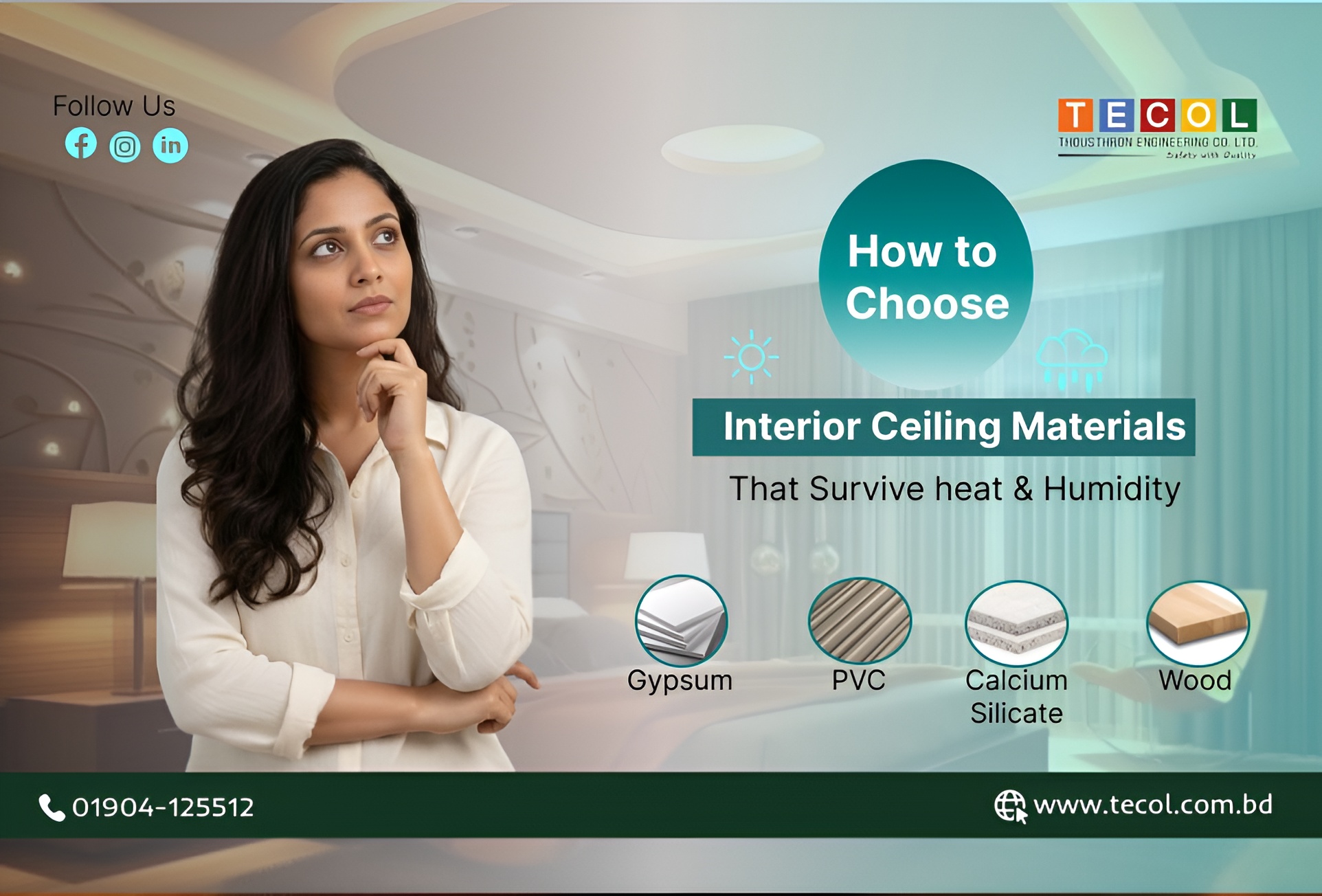
A Complete TECOL Guide for Heat-Resistant & Humidity-Proof Ceilings
Interior ceiling selection plays a critical role in maintaining the durability, comfort, and overall quality of any interior space. While ceilings are often chosen based on aesthetics and lighting design, their performance under heat and humidity conditions is frequently overlooked. In tropical regions like Bangladesh, ceilings are constantly exposed to rising heat, moisture, steam, and seasonal humidity, which can significantly affect material strength and lifespan. Choosing the wrong ceiling material often results in paint peeling, visible cracks, fungal growth, sagging panels, discoloration, and frequent maintenance issues.
A properly selected ceiling material should be heat-resistant, moisture-resistant, stable, and long-lasting. It must also support modern lighting systems while maintaining structural integrity over time. Based on extensive interior project experience and climate-specific material testing, TECOL presents a detailed guide to help homeowners and businesses choose interior ceiling materials that survive heat and humidity without compromising design quality.
1. How Heat and Humidity Affect Interior Ceilings
Heat naturally rises within enclosed spaces, which means ceilings are exposed to the highest temperatures inside a room throughout the day. In humid climates, moisture accumulates near ceiling surfaces, especially in kitchens, bathrooms, and poorly ventilated rooms. Over time, this combination of heat and humidity weakens ceiling materials, causing deformation, cracks, paint failure, and mold formation.
Low-quality or non-treated ceiling materials absorb moisture, expand during humid conditions, and contract when temperatures drop. This continuous expansion and contraction cycle leads to long-term structural damage. TECOL strongly recommends selecting ceiling materials that are specifically designed to handle heat fluctuation and humidity, ensuring durability and a clean interior finish for years.

2. Gypsum Board Ceiling – Modern Look with Climate Awareness
Gypsum board ceilings are among the most popular interior ceiling solutions due to their smooth finish, modern appearance, and flexibility in design. They allow easy installation of concealed lighting, cove lights, and decorative elements. However, standard gypsum boards are not naturally resistant to moisture and can absorb humidity if used incorrectly.
In hot and humid environments, moisture-resistant (MR) gypsum boards should always be chosen instead of regular boards. Proper sealing, high-quality primer, anti-fungal paint, and professional installation are essential to prevent sagging and mold growth. When installed correctly with adequate ventilation, gypsum ceilings perform well in living rooms, bedrooms, and office spaces where direct moisture exposure is limited.

3. PVC Ceiling Panels – A Reliable Solution for High Humidity
PVC ceiling panels are one of the most effective and low-maintenance ceiling materials for humid and high-temperature areas. These panels are 100% waterproof, moisture-proof, and termite-resistant, making them ideal for tropical climates. Unlike gypsum or wooden ceilings, PVC does not absorb moisture and remains stable even in extreme humidity conditions.
PVC ceilings are lightweight, easy to install, and simple to clean, which reduces long-term maintenance costs. They are widely used in kitchens, bathrooms, balconies, and utility spaces where steam and water exposure are frequent. TECOL often recommends PVC ceilings for clients who want a durable, budget-friendly, and humidity-proof ceiling solution without frequent repair requirements.

4. Calcium Silicate Board – High Performance Under Heat and Moisture
Calcium silicate boards are considered a premium ceiling material due to their excellent resistance to heat, moisture, and fire. These boards maintain their shape and strength even under extreme environmental conditions, making them highly suitable for both residential and commercial interiors. Unlike standard gypsum boards, calcium silicate boards are less prone to sagging, cracking, or fungal growth.
Because of their superior durability, calcium silicate boards are commonly used in kitchens, industrial spaces, and commercial buildings where ceiling performance is critical. Although the initial cost may be higher, their long lifespan and low maintenance make them a cost-effective solution in the long run. TECOL uses calcium silicate boards in projects that require maximum durability and safety.

5. Wooden Ceilings – Aesthetic Appeal with Careful Material Choice
Wooden ceilings add warmth, elegance, and a natural feel to interior spaces, but they require careful consideration in humid climates. Natural wood is sensitive to moisture and temperature changes, which can cause warping, cracking, and fungal growth if not treated properly.
Instead of solid wood, engineered wood, laminated panels, or treated wooden boards are more suitable for ceiling applications in humid environments. Proper sealing, polish, and ventilation are essential to prevent moisture damage. TECOL recommends using wooden ceilings only as accent elements in controlled environments rather than full ceiling coverage.

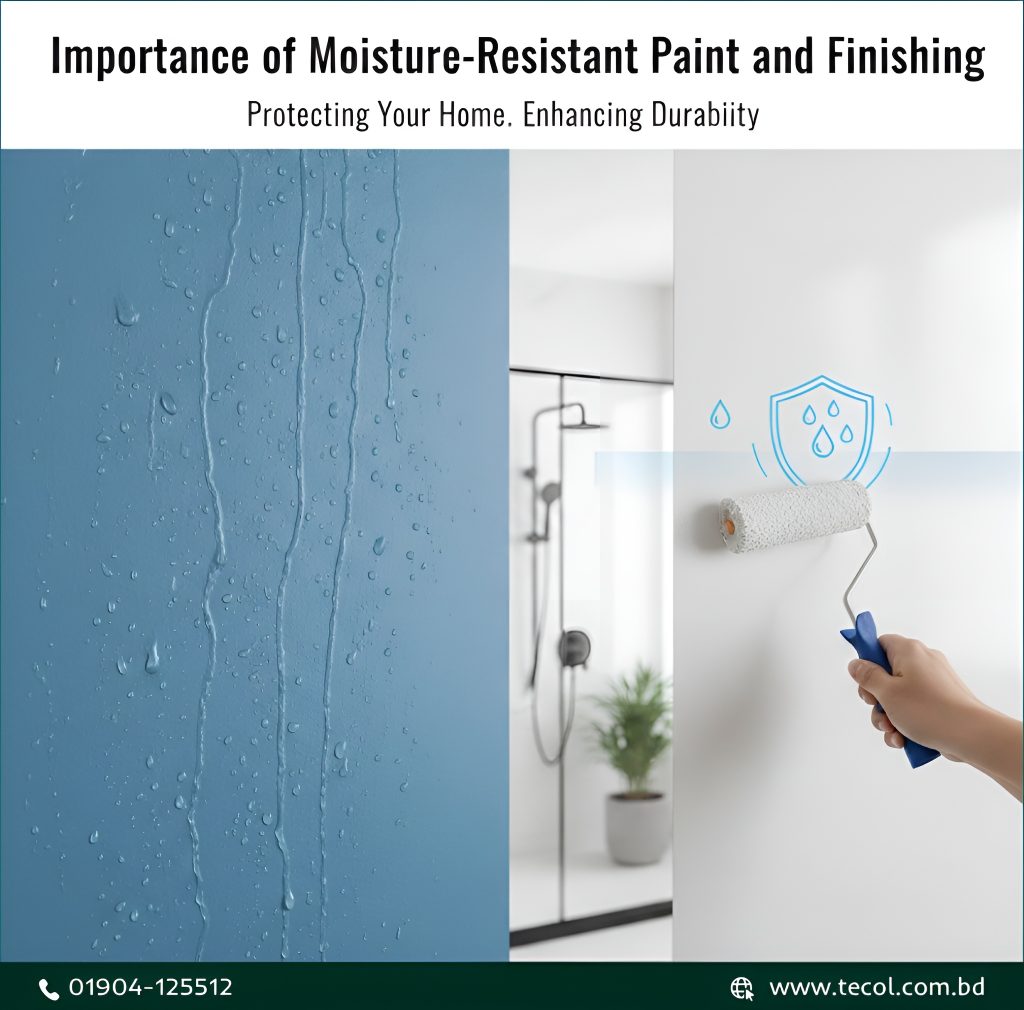
6. Importance of Moisture-Resistant Paint and Finishing
Regardless of the ceiling material chosen, finishing plays a crucial role in long-term performance. Moisture-resistant paints, anti-fungal coatings, high-quality primers, and proper sealing protect ceilings from humidity-related damage. Light-colored ceiling paints also help reflect heat, reducing temperature buildup inside rooms.
Skipping proper finishing often leads to early ceiling failure, even when good materials are used. TECOL emphasizes that finishing is a critical protective layer, not an optional aesthetic choice, especially in hot and humid climates.
7. Ventilation and Professional Installation Ensure Longevity
Proper ventilation allows heat and moisture to escape, reducing stress on ceiling materials. Without adequate airflow, trapped humidity accelerates deterioration and encourages mold growth. In addition, poor installation practices such as weak framing, incorrect spacing, and improper sealing can severely reduce ceiling lifespan.
TECOL ensures professional ceiling installation, including precise leveling, strong framework, moisture-proof sealing, and ventilation planning. Combining high-quality materials with expert workmanship ensures ceilings remain strong, stable, and visually appealing for many years.

Final TECOL Advice
To ensure interior ceilings survive heat and humidity for the long term, it is essential to choose climate-appropriate, moisture-resistant, and heat-tolerant ceiling materials that are specifically suited for tropical environments like Bangladesh. Avoid using untreated, low-grade, or non-humidity-resistant ceiling boards, as these materials tend to absorb moisture, weaken over time, and require frequent maintenance. Investing in proper finishing solutions such as moisture-resistant paint, anti-fungal coatings, high-quality primers, and sealed joints significantly improves ceiling durability and helps prevent common issues like mold growth, peeling, and discoloration. Equally important is professional ceiling installation and proper ventilation, which allow heat and trapped humidity to escape, reducing long-term stress on ceiling structures. A well-designed and properly installed interior ceiling not only enhances the overall aesthetics and comfort of your space but also provides lasting protection against heat and humidity, ensuring durability, safety, and value for years to come.