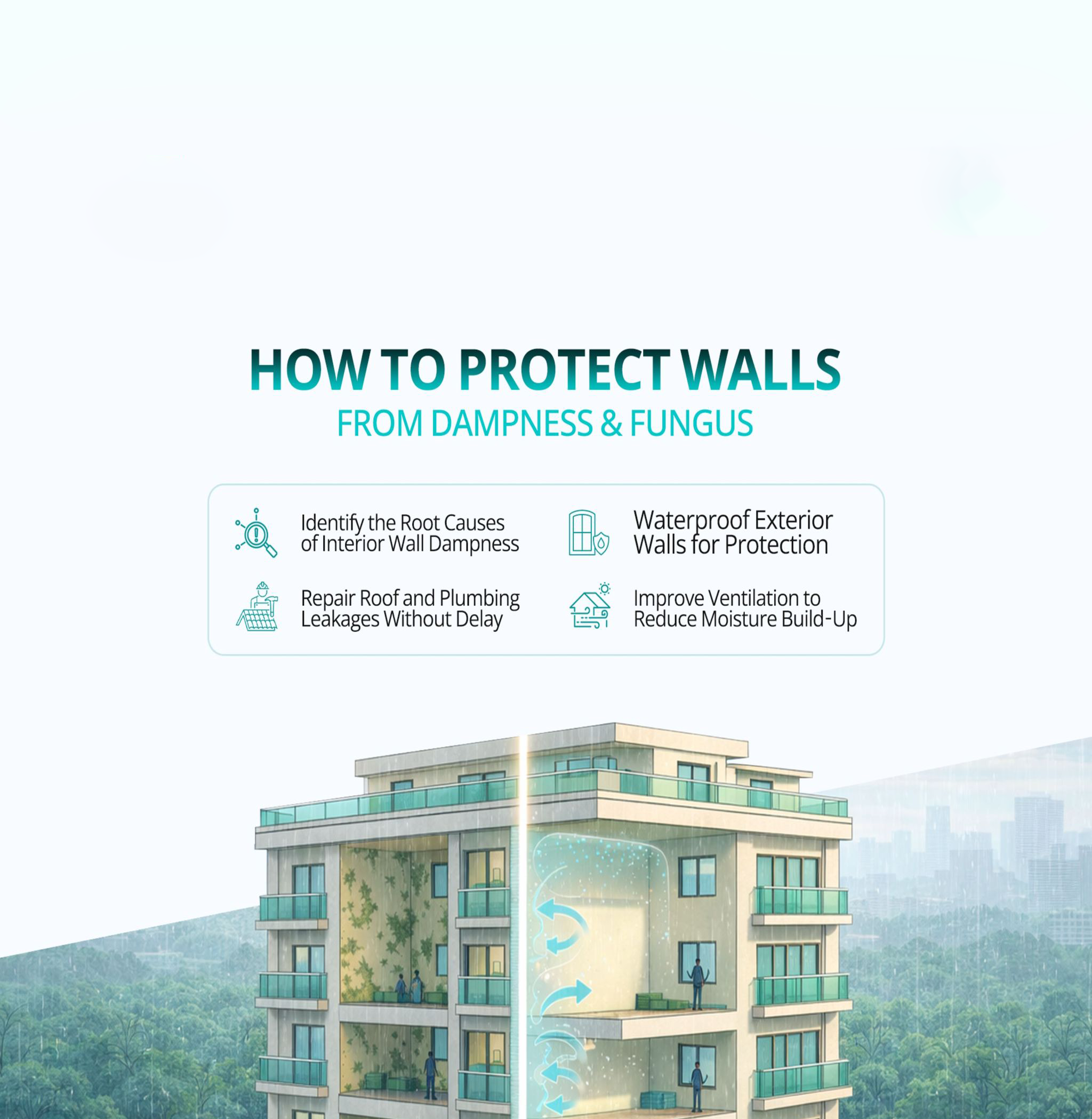
The monsoon season brings continuous rainfall, high humidity, and moisture-filled air, which can seriously damage interior walls if proper protection is not taken. Interior wall dampness, fungus growth, and mold stains are very common problems during monsoon, especially in humid regions like Bangladesh. These issues not only spoil the beauty of your home but also affect wall durability and indoor air quality.
With the right preventive measures, materials, and maintenance, you can keep your interior walls dry, healthy, and long-lasting throughout the rainy season.
1. Identify the Root Causes of Interior Wall Dampness
Before starting any damp-proof or waterproofing work, it is essential to accurately identify the root causes of interior wall dampness. Dampness inside walls usually develops due to water seepage from exterior walls, roof leakage, faulty or concealed plumbing lines, blocked drainage systems, and high indoor humidity levels.
Areas such as bathrooms, kitchens, store rooms, staircases, and walls directly exposed to rainwater are more vulnerable to moisture-related damage during the monsoon season. Proper inspection helps determine whether the issue is caused by external water penetration, internal leakage, or humidity condensation. Identifying the exact source ensures the right damp-proof solution is applied, prevents repeated wall damage, and reduces unnecessary repair costs. Early diagnosis is the foundation of a long-lasting interior wall dampness solution.
2. Waterproof Exterior Walls for Long-Term Protection
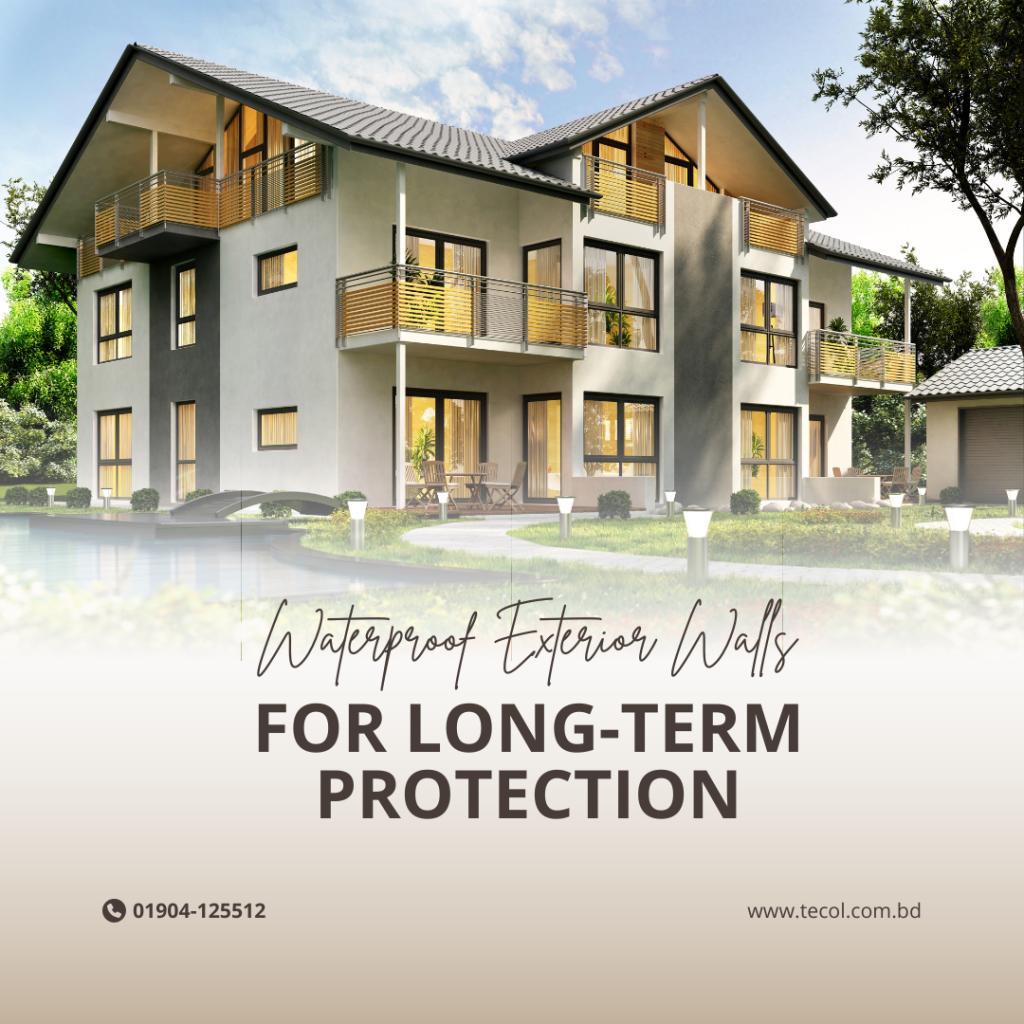
In most cases, interior wall dampness originates from poorly protected or untreated exterior walls. During heavy rainfall, water easily penetrates through hairline cracks, expansion joints, porous surfaces, and weak plaster layers, gradually reaching interior walls and causing moisture stains and fungus growth.
Applying high-quality exterior wall waterproofing solutions such as elastomeric waterproof coatings, weather-resistant exterior paints, and professional-grade waterproof sealants creates a durable barrier against rainwater. Proper exterior wall waterproofing not only prevents water seepage but also protects the internal structure of the building. It significantly reduces moisture penetration, controls fungal growth, prevents paint peeling, and increases the overall lifespan of walls. Exterior waterproofing is one of the most effective and long-term damp prevention methods for interior walls.
3. Repair Roof and Plumbing Leakages Without Delay
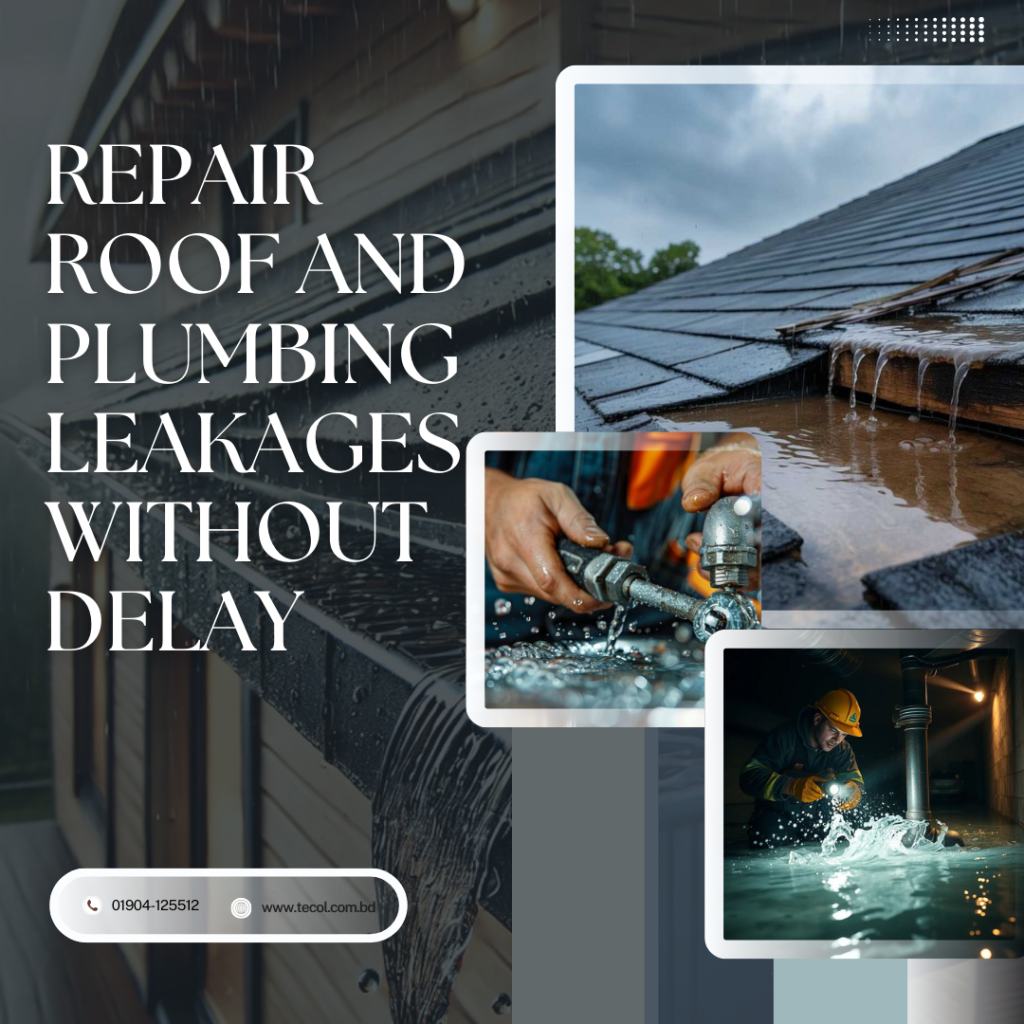
Roof leakage and concealed plumbing problems are among the most common causes of interior wall dampness during monsoon. Cracked roof slabs, damaged waterproof membranes, leaking overhead water tanks, broken bathroom fittings, and aging pipelines allow water to seep into walls and ceilings. Even minor leaks can slowly spread moisture, weakening wall structure and causing persistent damp patches.
Regular inspection of roof surfaces, bathrooms, kitchen plumbing, drainage pipes, and water supply lines is essential, especially before and during the rainy season. Immediate repair of leakages prevents continuous moisture exposure, protects interior wall finishes, and reduces the risk of structural damage. Timely maintenance ensures dry, strong, and fungus-free interior walls throughout the monsoon.
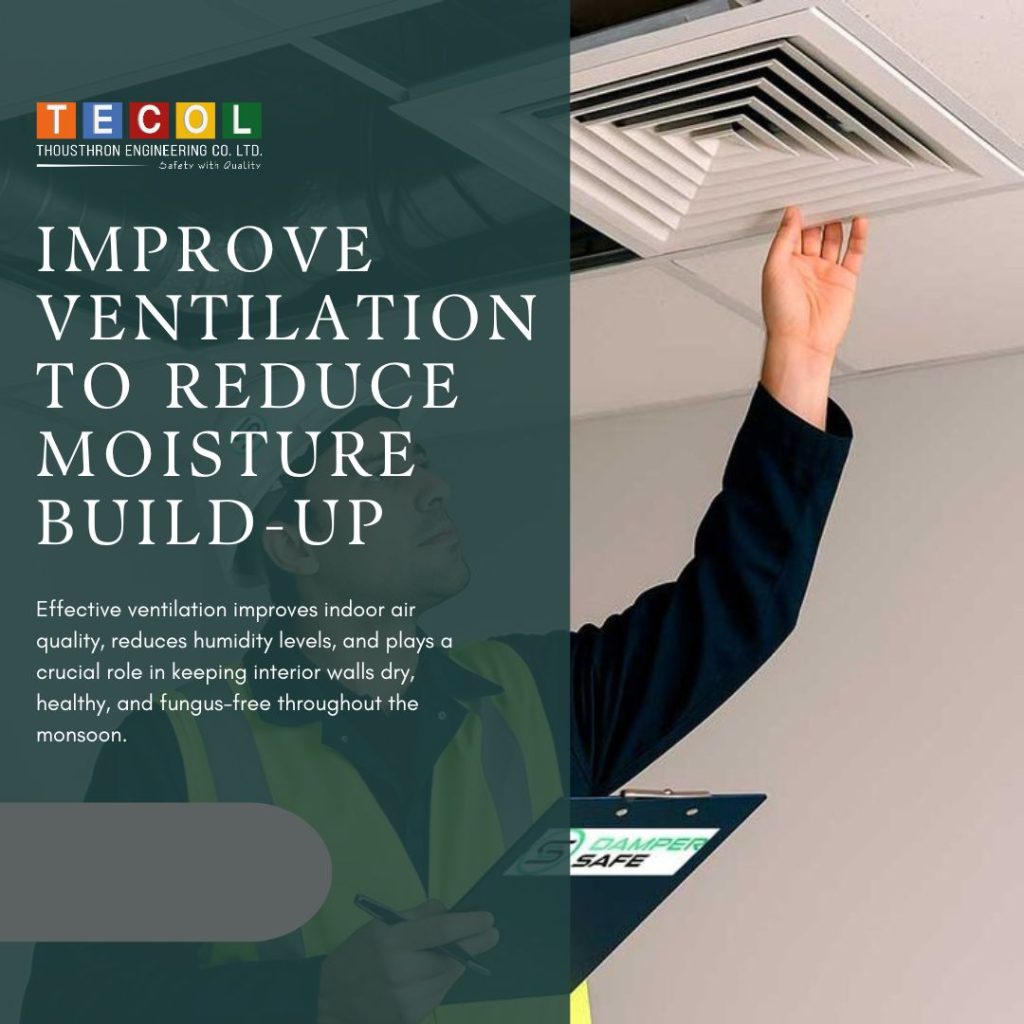
4. Improve Ventilation to Reduce Moisture Build-Up
Poor ventilation is one of the leading causes of interior wall dampness and fungus growth, especially during the monsoon season. When humid air remains trapped inside rooms, moisture settles on wall surfaces, creating an ideal environment for mold, mildew, and fungal stains. Without proper airflow, even well-painted walls can slowly absorb moisture and deteriorate over time.
To prevent this, ensure proper cross ventilation by allowing fresh air to flow naturally through windows and doors. Keep windows open whenever weather conditions permit, especially during daytime. Installing exhaust fans in kitchens, bathrooms, and utility areas helps remove excess moisture generated from cooking, bathing, and daily activities.
Effective ventilation improves indoor air quality, reduces humidity levels, and plays a crucial role in keeping interior walls dry, healthy, and fungus-free throughout the monsoon.
5. Use Anti-Fungal and Moisture-Resistant Interior Paints
Standard interior paints are not designed to withstand high humidity and moisture exposure. During the monsoon season, using regular paint can lead to peeling, discoloration, mold growth, and fungal patches. To protect walls effectively, always choose anti-fungal, moisture-resistant interior paints specially formulated for humid environments.
These advanced paints contain anti-bacterial and moisture-repellent additives that prevent water absorption and stop fungus from forming on wall surfaces. For best results, apply a damp-proof primer or moisture-resistant seal coat before painting. This additional layer strengthens the wall surface, enhances paint adhesion, and ensures a smooth, durable, and long-lasting finish even in high-humidity conditions. Using the right paint system is essential for long-term interior wall protection during monsoon.
6. Apply Professional Damp-Proof Treatment on Affected Areas
When interior walls already show visible signs of dampness—such as dark patches, bubbling paint, salt deposits, musty odor, or fungus stains—surface-level solutions are not enough. In such cases, professional damp-proof treatment for interior walls becomes necessary to address the problem at its source.
Advanced treatments like chemical waterproofing, wall seal injections, moisture-blocking coatings, and damp-proof membranes prevent water from traveling through wall structures. These methods stop moisture penetration permanently and protect walls from recurring damage.
Professional damp-proof solutions provide long-term moisture control, prevent repeated fungus growth, and restore wall strength and appearance, ensuring your interior walls remain protected during future monsoon seasons as well.
7. Control Indoor Humidity Levels Effectively
High indoor humidity is one of the primary causes of interior wall fungus, mold growth, and damp patches during the monsoon season. Excess moisture in the air settles on wall surfaces, allowing fungus to spread rapidly, especially in closed or poorly ventilated rooms. Maintaining balanced humidity levels is essential for long-term wall protection.
During monsoon, use dehumidifiers, moisture absorbers, silica gel packs, or humidity control devices to reduce excess moisture inside rooms. Pay special attention to bedrooms, wardrobes, and storage areas where airflow is limited. Avoid drying wet clothes indoors, as this significantly increases indoor humidity and directly affects wall surfaces.
Effective humidity control keeps interior walls dry, minimizes musty odors, prevents fungal growth, and helps maintain a healthy, comfortable indoor environment.
8. Clean and Maintain Interior Walls Regularly
Regular cleaning and maintenance are crucial for preventing wall dampness and fungus formation during the rainy season. Moisture buildup, condensation, and dust create favorable conditions for mold growth if left untreated. Early maintenance prevents minor issues from turning into serious damage.
If you notice condensation or dampness on wall surfaces, wipe them immediately using a dry or slightly damp cloth. Clean early fungal spots with mild cleaning solutions or anti-fungal wall cleaners before they spread further. Regular wall maintenance not only improves the visual appeal of your interiors but also protects wall strength and paint quality.
Consistent care helps prevent long-term moisture damage and ensures clean, fresh, and fungus-free interior walls throughout the monsoon.
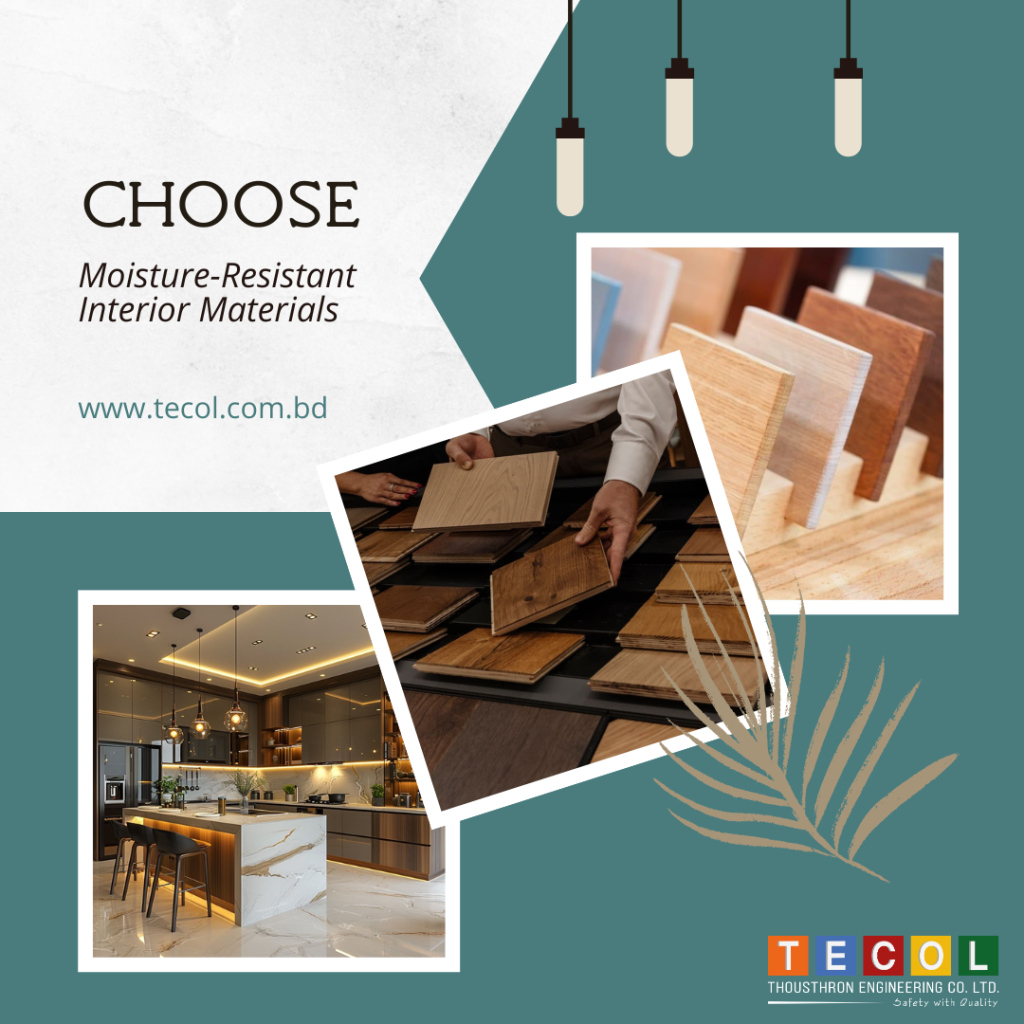
9. Choose Moisture-Resistant Interior Materials
Selecting the right materials plays a vital role in protecting interior walls from moisture-related problems. Conventional materials often absorb water during high humidity, leading to swelling, warping, and fungal growth. Using moisture-resistant interior materials significantly improves wall performance in damp conditions.
Materials such as marine plywood, uPVC wall panels, moisture-resistant gypsum boards, cement boards, and treated wood are specially designed to withstand humidity. These materials absorb less moisture, remain structurally stable, and require minimal maintenance during monsoon.
Choosing moisture-resistant materials ensures long-lasting durability, better wall protection, and improved interior performance, making them ideal for humid environments.
10. Do Preventive Maintenance Before the Monsoon Season
Preventive maintenance is the most effective and cost-efficient way to protect interior walls from dampness and fungus. Before the monsoon season begins, conduct a thorough inspection of walls, ceilings, corners, joints, and external-facing surfaces. Look for cracks, peeling paint, water stains, or early signs of dampness.
Repair damaged areas promptly, seal cracks, apply waterproof coatings, and repaint where necessary using moisture-resistant paints. Pre-monsoon maintenance helps strengthen wall surfaces and prevents water infiltration before heavy rainfall starts.
Regular preventive care ensures interior walls remain strong, dry, visually appealing, and fungus-free throughout the monsoon season.
TECOL Expert Tips for Monsoon Wall Protection
At TECOL, we recommend taking a preventive and professional approach to protect interior walls during the monsoon season. Instead of applying temporary surface solutions, focus on root-cause treatment, quality materials, and proper waterproofing systems. Our experts suggest combining exterior waterproof coatings, damp-proof primers, moisture-resistant paints, and adequate ventilation for long-lasting results.
Regular inspection before and during monsoon helps identify early signs of dampness, allowing timely repair and cost savings. By following TECOL’s expert-backed solutions, homeowners can ensure fungus-free, durable, and healthy interior walls that remain protected year after year—even in high-humidity environments.
Conclusion
Protecting interior walls from dampness and fungus during the monsoon requires a well-planned approach that includes proper wall waterproofing, effective ventilation, indoor humidity control, high-quality materials, and timely preventive maintenance. Addressing moisture issues early helps preserve wall finishes, prevent health hazards, and improve indoor air quality.
By taking proactive steps and using the right solutions, you can ensure your home remains healthy, durable, and visually attractive, regardless of how intense the monsoon becomes. A well-maintained interior not only enhances comfort but also increases the long-term value of your living space.