A Complete Guide for Long-Lasting Beauty in Humid Climates
Wooden furniture brings elegance, warmth, and a timeless appeal to any interior space. From wardrobes and beds to dining tables and office desks, wood enhances both residential and commercial interiors. However, in hot and humid climates, sweat, water stains, and excess moisture pose serious threats to wooden furniture. Without proper protection, moisture can slowly penetrate the surface, causing discoloration, swelling, cracking, fungal growth, and a gradual loss of shine and durability.
1. Understanding Why Sweat and Water Damage Wooden Furniture
Wood is a natural and porous material, which means it easily absorbs moisture from its surroundings. Human sweat, accidental water spills, humid air, and damp walls or floors continuously expose wooden furniture to moisture. Over time, this exposure leads to common problems such as white or dark water rings, sticky surfaces, swollen boards, peeling polish or laminate layers, and a significantly reduced furniture lifespan. Recognizing these risks is the first step toward proper furniture protection.

2. Importance of High-Quality Waterproof Wood Finishing
Applying a professional waterproof finish is the most effective way to protect wooden furniture from sweat and water stains. Finishes such as PU (polyurethane) polish, melamine polish, acrylic coating, and UV coating create a sealed protective layer over the wood surface. This layer blocks moisture penetration while enhancing surface strength, smoothness, and visual appeal. Among these options, PU polish is particularly suitable for beds, wardrobes, dining tables, and office furniture due to its excellent water resistance and long-lasting performance.

3. Role of Laminates and Veneers in Moisture Protection
Furniture surfaces that are frequently touched or used require additional protection. High-pressure laminates are highly resistant to water, sweat, and heat, making them easy to clean and ideal for long-term use. Natural veneers offer a premium wooden appearance, but they must be carefully sealed with PU polish to prevent moisture absorption. Proper edge banding is essential, as unsealed edges are the most vulnerable areas where water and humidity can easily enter.

4. Protecting High-Touch Furniture Areas from Sweat
Certain furniture parts are more prone to sweat stains due to repeated skin contact. Bed headboards, chair armrests, sofa wooden frames, study tables, and dressing units often absorb sweat over time. Using fabric or leather padding, glass or acrylic tops, decorative runners, or detachable covers helps minimize direct contact with the wooden surface. These protective measures significantly reduce sweat absorption and help maintain a clean, stain-free appearance.

5. Controlling Indoor Humidity and Air Circulation
Even without direct water contact, humid air can damage wooden furniture over time. Maintaining proper ventilation and air circulation helps regulate indoor humidity levels. Keeping furniture slightly away from walls, avoiding placement near bathrooms or damp areas, using exhaust fans in kitchens and bedrooms, and employing dehumidifiers during monsoon seasons all contribute to protecting wood from swelling and fungal growth.

6. Immediate Cleaning to Prevent Permanent Stains
Quick action is essential when sweat or water comes into contact with wooden furniture. Moisture left on the surface for too long can seep into the wood and leave permanent marks. Cleaning spills immediately with a soft, dry microfiber cloth is the safest approach. Mild wood cleaners can be used occasionally, but wet wiping, harsh chemicals, and rough cloths should always be avoided. Ensuring the surface is completely dry after cleaning helps prevent moisture retention.

7. Benefits of Regular Furniture Waxing and Polishing
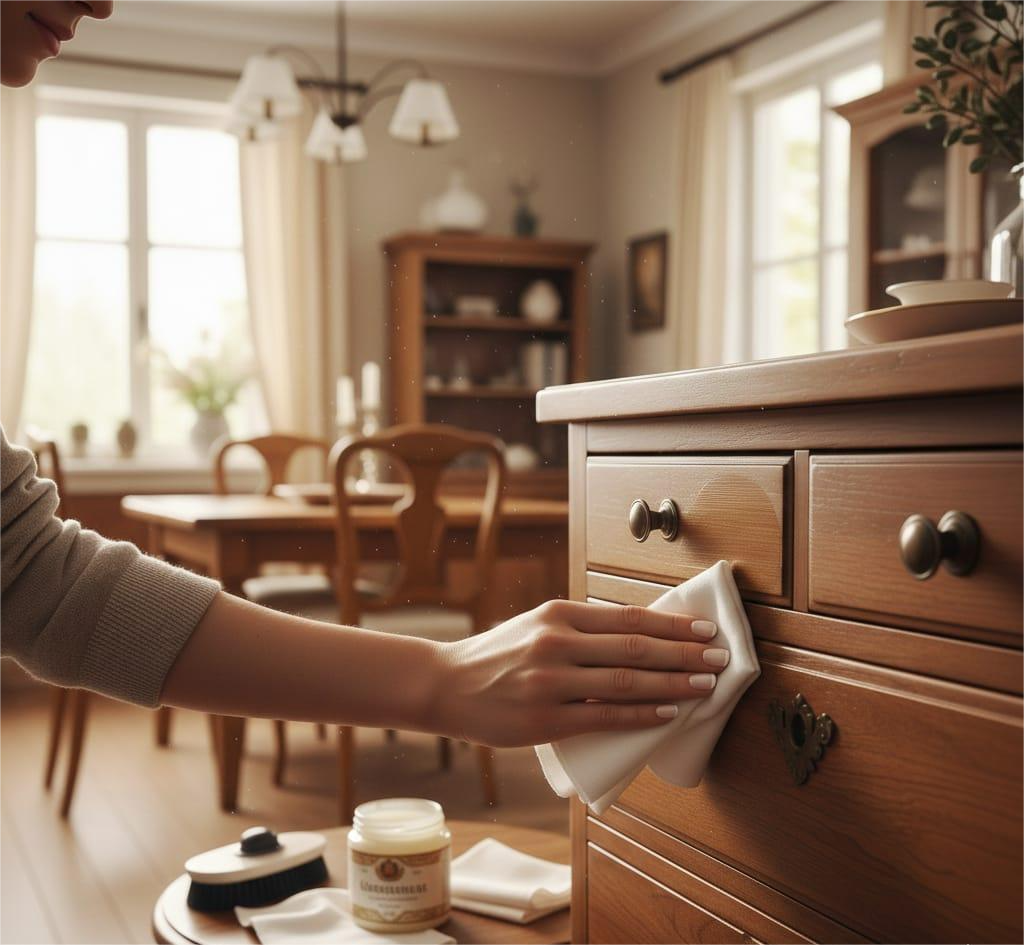
Regular waxing and polishing add an extra moisture-repellent layer to wooden furniture. Furniture wax and polish enhance the natural color and shine of wood while protecting it from sweat penetration and surface wear. Consistent polishing also helps maintain the protective finish and extends the overall lifespan of the furniture. For best results, polishing every two to three months is recommended, especially in humid environments.
9. Importance of Professional Installation and Finishing
Even the highest-quality materials can fail if installation is not done correctly. Professional craftsmanship ensures accurate board cutting, proper joint sealing, waterproof adhesive use, and correct leveling. Well-sealed joints and edges prevent moisture entry, enhance structural strength, and significantly increase the lifespan of wooden furniture.

Final TECOL Expert’s Advice
Protecting wooden furniture from sweat and water stains requires a balanced combination of quality materials, waterproof finishing, humidity control, careful cleaning, and regular maintenance. With the right approach and professional execution, wooden furniture can remain elegant, stain-free, and durable for many years—even in extreme humidity.