A Complete Guide to Bedroom Lighting for Better Sleep and Relaxation
Quality sleep is essential for maintaining good health, productivity, and emotional balance. While many people invest in comfortable beds and quiet environments, bedroom lighting is often ignored—even though it plays a major role in how well we sleep.
The right lighting helps regulate the body’s natural sleep cycle, relax the mind, and prepare the body for rest.
Why Bedroom Lighting Is Essential for Better Sleep Quality
Bedroom lighting directly affects the body’s circadian rhythm, which controls when we feel awake and when we feel sleepy. As evening approaches, reduced and warmer light signals the brain to release melatonin, the hormone responsible for sleep.
If your bedroom has harsh or incorrect lighting, melatonin production decreases. This can cause difficulty falling asleep, light sleep, and frequent night waking. That’s why choosing sleep-friendly bedroom lighting is essential for long-term health.
Problems caused by poor bedroom lighting:
-
Difficulty falling asleep
-
Light, interrupted sleep
-
Mental restlessness at night
-
Morning fatigue and low energy
-
Long-term sleep disorders
This is why choosing the right lighting for bedroom sleep is not a luxury—it is a necessity.

1. Warm Lighting (2700K–3000K): The Best Lighting for Bedroom Sleep
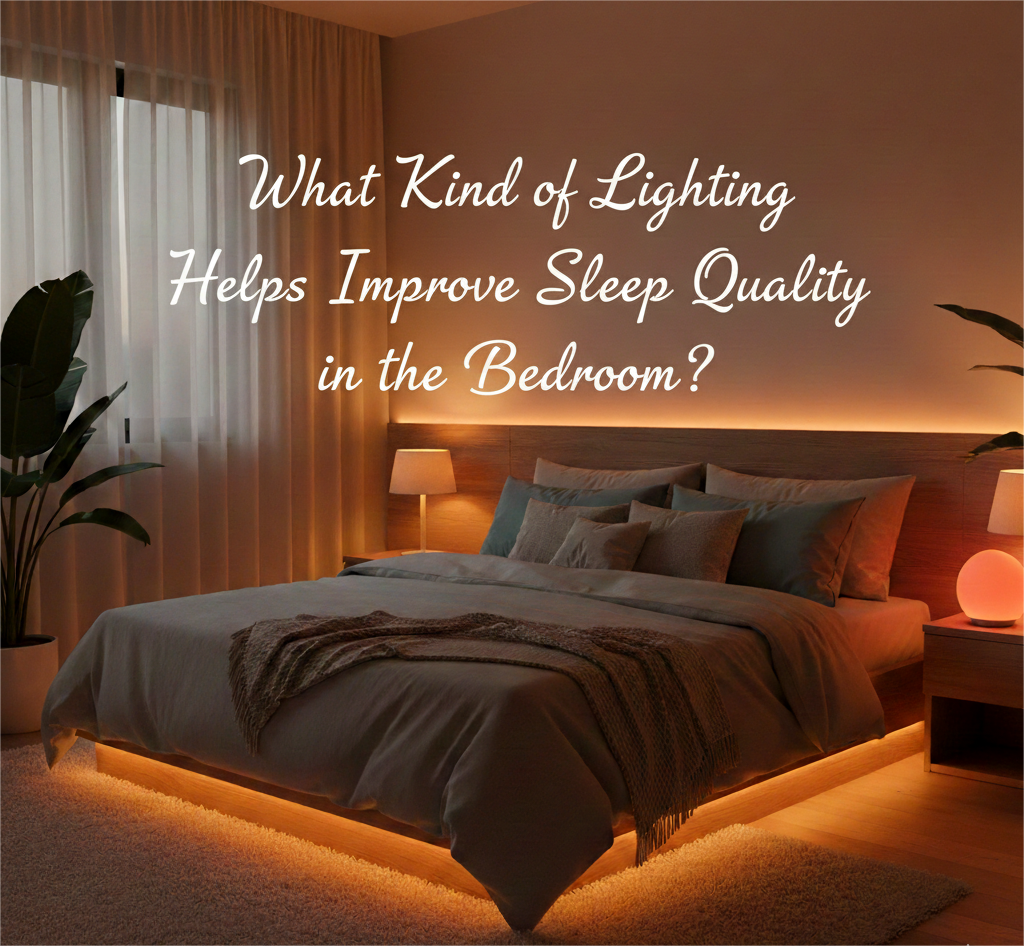
Warm lighting is the most recommended option for improving sleep quality in the bedroom. It produces soft yellow or amber tones that closely resemble natural sunset light.
This type of lighting helps the brain relax and prepares the body for rest. Unlike cool or white light, warm lighting does not suppress melatonin, making it ideal for nighttime use. It also creates a cozy and comfortable bedroom atmosphere.
Why warm light is ideal for sleep:
-
Supports natural melatonin production
-
Signals the brain that it’s time to relax
-
Reduces eye strain and mental stimulation
-
Creates a cozy, calming bedroom atmosphere
Warm lighting helps transition the body from an active state to a restful state, making it easier to fall asleep naturally.
Best places to use warm lighting:
-
Bedside table lamps
-
Wall-mounted lights
-
Floor lamps near the bed

2. Dim Lighting: Low-Intensity Light for Relaxation
Brightness level is just as important as light color. Dim lighting helps reduce mental stimulation and prepares the body for sleep by creating a peaceful nighttime environment. Low-intensity bedroom lighting prevents eye strain and reduces alertness before bedtime. Using dim lights or dimmer switches allows gradual adjustment, making it easier to transition from evening activities to restful sleep.
Benefits of dim bedroom lighting:
-
Prevents over-stimulation of the brain
-
Reduces visual fatigue before sleep
-
Encourages relaxation and calmness
-
Helps maintain a healthy bedtime routine
Bright lights keep your brain alert, while dim lights tell your body that the day is ending.

3. Indirect Lighting: Soft and Eye-Friendly Bedroom Illumination
Indirect lighting creates a gentle glow by reflecting light from walls or ceilings instead of shining directly into the eyes. This type of lighting is ideal for bedrooms because it feels soft and natural. Cove lighting, LED strip lights behind headboards, or hidden ceiling lights are common examples. These lighting solutions reduce glare and harsh shadows, making the bedroom more comfortable and relaxing.
Popular indirect lighting options:
-
Cove lighting in false ceilings
-
LED strip lights behind headboards
-
Hidden wall or ceiling lights
Why indirect lighting improves sleep:
-
Eliminates harsh glare
-
Creates uniform, gentle illumination
-
Reduces eye stress
-
Enhances relaxation and comfort
Indirect lighting is especially effective for people who are sensitive to bright light at night.

4. Bedside Lamps: Perfect Lighting for Pre-Sleep Activities
Bedside lamps are essential for nighttime activities such as reading or relaxing without disturbing the entire room. They offer focused light while keeping the overall bedroom calm and dim. A good bedside lamp uses warm light, low wattage, and a soft shade to prevent direct eye exposure. This type of lighting supports a healthy bedtime routine and improves sleep quality.
Ideal bedside lamp features:
-
Warm color temperature
-
Low wattage bulb
-
Fabric or frosted lamp shade
-
Adjustable angle or height
Why bedside lamps are sleep-friendly:
-
Avoid harsh overhead lighting
-
Ideal for reading or relaxing before sleep
-
Help maintain a consistent sleep schedule
A good bedside lamp supports relaxation while keeping your bedroom calm and sleep-ready.

5. Smart Lighting: Modern Technology for Better Sleep Quality
Smart lighting systems are designed to adapt to your daily routine and support better sleep habits. These lights allow you to control brightness, color temperature, and timing. Smart lights can gradually dim at night, helping your body naturally prepare for sleep. In the morning, they can slowly brighten to simulate sunrise, making waking up easier and more natural.
Smart bedroom lighting features:
-
Adjustable brightness and color temperature
-
Sleep mode with gradual dimming
-
Wake-up light simulation
-
App or voice control
How smart lighting improves sleep:
-
Gradually reduces light at bedtime
-
Prevents sudden brightness changes
-
Mimics natural sunrise in the morning
-
Reduces dependence on harsh lights
Smart lighting helps align your bedroom lighting with your natural sleep rhythm.

Lighting Types You Should Avoid in the Bedroom
Certain lighting types can negatively affect sleep quality and should not be used in bedrooms. Cool white light and blue light increase alertness and suppress melatonin production. Bright ceiling lights and exposed LEDs can also cause discomfort at night. Avoiding these lighting types helps maintain a calm environment and supports deeper, uninterrupted sleep
Avoid these bedroom lighting types:
- Cool white light (4000K–6500K)
- Blue light from TVs, phones, tablets
- High-intensity ceiling lights
- Exposed LED lights without diffusers
Why these lights are harmful:
-
Suppress melatonin production
-
Keep the brain alert
-
Delay sleep onset
-
Reduce deep sleep quality
Avoiding these lighting types is critical for healthy sleep patterns.

Ideal Bedroom Lighting Setup for Quality Sleep
The best bedroom lighting setup combines multiple soft light sources rather than relying on a single bright light. This layered approach creates a balanced and relaxing environment. Warm ceiling lights, bedside lamps, and indirect lighting work together to improve sleep comfort. Adding dimmers or smart controls allows easy adjustment based on time and mood.
TECOL Tips: How to Design a Sleep-Friendly Bedroom Lighting Setup
At TECOL, we recommend focusing on layered lighting instead of relying on a single light source in the bedroom. Combining warm ceiling lights, soft bedside lamps, and indirect lighting creates a balanced environment that feels calm and relaxing. Always choose warm color temperatures (2700K–3000K) and avoid harsh, exposed lighting to support natural sleep patterns.
TECOL also advises using dimmers or smart lighting controls to adjust brightness according to time and mood. Proper placement of lights is just as important as the type of light—keeping direct light away from the eyes helps reduce strain and promotes deeper sleep. A well-planned bedroom lighting design not only improves sleep quality but also enhances overall comfort and interior aesthetics.
Final Thoughts: The Right Bedroom Lighting Improves Sleep Naturally
Bedroom lighting has a direct impact on how quickly you fall asleep and how well you rest throughout the night. Warm, dim, and indirect lighting helps calm the mind and supports natural sleep rhythms.
By choosing sleep-friendly bedroom lighting, you can improve sleep quality, reduce stress, and wake up feeling refreshed. Good lighting is not just about design—it is essential for a healthy lifestyle.